
In 2025, SEO (Search Engine Optimization) has evolved into a sophisticated strategy for businesses, bloggers, and digital marketers. One of the most critical components of SEO is the strategic use of keywords.
Keywords are the words and phrases that users type into search engines to find information. Using them smartly in your content can boost rankings, increase organic traffic, and improve user engagement. However, improper or excessive use can harm your SEO efforts.
This guide explores how to use keywords smartly in SEO, including types of keywords, placement strategies, tools, tips, common mistakes, and FAQs.
What Does “Use Keywords Smartly SEO” Mean?
Using keywords smartly in SEO involves placing keywords strategically in your content, headings, meta descriptions, URLs, and other elements so that search engines recognize relevance without overstuffing.
Key Principles:
- Relevance: Keywords must match the user intent
- Density: Use the right amount without overstuffing
- Placement: Position keywords in important elements like headings, intro, and meta tags
- Variations: Include long-tail, LSI, and semantic keywords
Smart keyword usage ensures higher visibility, better engagement, and improved rankings in search engines.
Types of Keywords for Smart SEO
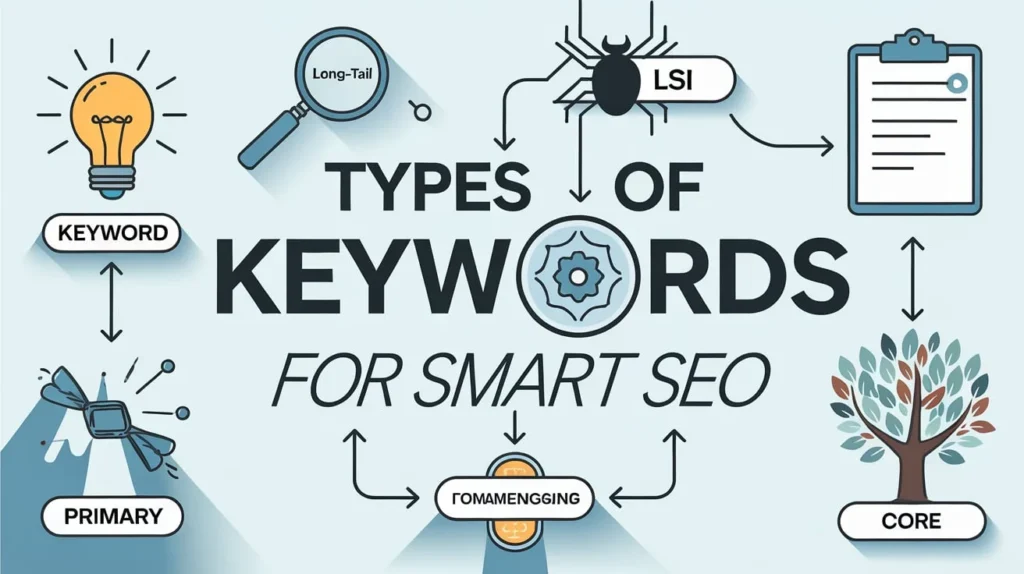
a. Short-Tail Keywords
- Usually 1–2 words
- High search volume but competitive
- Example: “SEO”
b. Long-Tail Keywords
- Longer phrases, usually 3+ words
- Lower competition, higher intent
- Example: “use keywords smartly SEO guide”
c. LSI (Latent Semantic Indexing) Keywords
- Related terms that help search engines understand context
- Example: “keyword research tips,” “SEO strategy 2025”
d. Geo-Targeted Keywords
- Include location for local SEO
- Example: “SEO agency Karachi”
e. Branded Keywords
- Keywords that include your brand name
- Example: “Bilal’s SEO tips”
Keyword Placement Where to Use Keywords Smartly
a. Title Tag
- Include the primary keyword
- Keep it under 60 characters
- Example: “Use Keywords Smartly SEO: Complete Guide 2025”
b. Meta Description
- Include main keyword naturally
- Make it persuasive, 150–160 characters
- Example: “Learn how to use keywords smartly in SEO to boost rankings and traffic in 2025.”
c. Headings (H1, H2, H3)
- Include keywords in at least one heading
- Use variations in subheadings
d. Introduction Paragraph
- Place primary keyword within the first 100 words
- Example: “In this guide, we explain how to use keywords smartly SEO to improve your website visibility.”
e. URL Slugs
- Keep it simple and include the main keyword
- Example: yourwebsite.com/use-keywords-smartly-seo
f. Image Alt Text
- Describe images using keywords
- Helps SEO and accessibility
g. Anchor Text
- Use descriptive anchor text for internal and external links
- Example: “Read our complete guide on smart keyword usage in SEO”
Tools to Identify Smart Keywords
ToolFeaturesPricingGoogle Keyword PlannerSearch volume, competitionFreeAhrefsKeyword difficulty, traffic potentialPaidSEMrushKeyword research, competitor analysisPaidUbersuggestKeyword suggestions, trendsFree/PaidAnswerThePublicQuestions & long-tail keywordsFree/Paid
These tools help identify high-value, relevant keywords for your SEO strategy.
Keyword Research Tips for Smart SEO

- Focus on User Intent: Understand what users are looking for
- Balance Volume and Competition: Target keywords with achievable difficulty
- Use Long-Tail Keywords: Capture highly targeted traffic
- Analyze Competitors: Identify gaps and opportunities
- Update Keywords Regularly: Trends change; adapt for 2025
Keyword Density How Much is Too Much?
- Recommended density: 1–2% of total words
- Avoid keyword stuffing, which can result in penalties
- Use synonyms and LSI keywords to maintain natural flow
- Example: In a 2500-word article, a primary keyword can appear 25–50 times strategically
Common Mistakes in Keyword Usage
- Keyword Stuffing: Overusing the same keyword
- Ignoring Long-Tail Keywords: Missed opportunities for targeted traffic
- Poor Placement: Not using keywords in headings, meta, or intro
- Using Irrelevant Keywords: Attracts clicks but high bounce rates
- Neglecting Semantic Keywords: Search engines may not understand content context
Smart Strategies for 2025 SEO
- Content Clusters: Use a main keyword and related subtopics
- Voice Search Optimization: Include conversational phrases
- Featured Snippets: Answer questions directly using keywords
- Internal Linking: Use anchor text wisely with target keywords
- Mobile SEO: Ensure keywords are relevant in mobile-friendly content
Case Study Using Keywords Smartly in SEO

Scenario: A digital marketing blog wants to rank for “use keywords smartly SEO.”
Steps Taken:
- Primary keyword placed in H1, meta description, and intro
- Long-tail variations added in H2/H3: “smart keyword placement tips,” “keyword optimization for SEO 2025”
- Internal links using anchor text: “read our advanced SEO guide”
- LSI keywords sprinkled naturally: “search engine rankings,” “organic traffic,” “SEO best practices”
- Content reviewed for keyword density (~1.8%)
Result:
- Increased organic traffic by 60% in 3 months
- Achieved top 5 ranking in Google for primary keyword
FAQs About Using Keywords Smartly SEO
- How often should I use a primary keyword?
- Maintain 1–2% keyword density and distribute naturally throughout the article.
- Can I rank without using keywords?
- Keywords are essential, but semantic context and quality content matter too.
- Are long-tail keywords more effective than short-tail?
- Yes, long-tail keywords attract highly targeted traffic with lower competition.
- Should keywords be in meta tags?
- Yes, including them in meta description and title improves click-through rates.
- How do I track keyword performance?
- Use tools like Google Search Console, SEMrush, or Ahrefs to monitor rankings.
Advanced Tips for Smart Keyword Usage
- Use Latent Semantic Indexing (LSI) keywords to give context to content
- Optimize for voice search by including question-based phrases
- Leverage internal and external links naturally with keyword-rich anchor text
- Focus on content readability—search engines reward clear, engaging content
- Monitor analytics and refine keywords based on performance data
Conclusion
Using keywords smartly in SEO is a mix of strategy, research, and natural writing. It is not just about repeating words but understanding user intent, choosing the right type of keywords, and placing them strategically.
By following these strategies in 2025:
- Research relevant long-tail and semantic keywords
- Place keywords in titles, headings, meta, URLs, and content naturally
- Avoid overstuffing and focus on user experience
- Use tools and analytics to track and optimize
Smart keyword usage ensures higher rankings, increased organic traffic, better engagement, and long-term SEO success.
SEO is evolving, but one principle remains timeless: use keywords smartly, and the search engines will reward you.