

In 2025, Content Marketing and SEO (Search Engine Optimization) have become the backbone of online success for businesses, bloggers, and digital marketers. The digital landscape is more competitive than ever, and having a website or social media presence alone is not enough. To attract, engage, and convert audiences, you need high-quality content combined with SEO strategies.
Content Marketing is about creating and distributing valuable, relevant, and consistent content to attract a clearly defined audience, while SEO ensures your content is discoverable by search engines like Google. Together, they drive traffic, increase brand visibility, and generate revenue.
This guide will teach you how to master content marketing and SEO in 2025, covering strategies, tools, types of content, analytics, best practices, and actionable tips.
By the end, you will know:
- How to plan and create SEO-friendly content
- Types of content that drive traffic and conversions
- On-page and off-page SEO techniques
- Tools to optimize content and track performance
- Best practices for 2025 and beyond
- FAQs and case studies
Understanding Content Marketing
Content Marketing is the strategic approach to creating valuable content to attract, retain, and convert your target audience.
Key Goals of Content Marketing:
- Brand Awareness – Educate your audience about your products or services.
- Engagement – Encourage interaction and feedback through blogs, videos, and social media.
- Lead Generation – Capture emails, registrations, or inquiries.
- Customer Retention – Provide ongoing value to existing customers.
- Revenue Growth – Monetize traffic through products, services, or affiliate marketing.
Types of Content in 2025:
Type of ContentDescriptionBenefitBlog PostsInformative articles targeting keywordsBoosts SEO, attracts organic trafficVideosTutorials, reviews, live streamsHigher engagement and retentionInfographicsVisual representation of data or processesEasy to understand and shareablePodcastsAudio content for niche audiencesBuilds authority and communityEbooks & GuidesIn-depth resourcesCaptures leads and educates audienceSocial Media PostsShort-form content across platformsExpands reach and engagementCase StudiesReal-world examples of successBuilds credibility and trust
Understanding SEO in 2025
SEO (Search Engine Optimization) is the practice of optimizing your website and content so that search engines rank it higher for relevant keywords.
Core Components of SEO:
- On-Page SEO – Optimization within your website:
- Title tags and meta descriptions
- Headings (H1, H2, H3)
- Keyword usage and density
- Internal linking
- Image alt text
- Off-Page SEO – External factors affecting ranking:
- Backlinks from authoritative websites
- Social signals and shares
- Guest posting and influencer collaborations
- Technical SEO – Backend optimization for better crawling and indexing:
- Site speed and performance
- Mobile responsiveness
- Secure HTTPS protocol
- Sitemap and robots.txt configuration
- User Experience (UX) Signals – Google now considers UX metrics:
- Click-through rate (CTR)
- Bounce rate
- Time on page
- Core Web Vitals (loading speed, interactivity, visual stability)
Planning Your Content Marketing and SEO Strategy
A well-structured strategy ensures maximum ROI from your content and SEO efforts.
Steps to Plan Your Strategy:
- Define Your Target Audience
- Create buyer personas
- Understand their pain points, interests, and needs
- Keyword Research
- Use tools like Ahrefs, SEMrush, Moz, Ubersuggest, and Google Keyword Planner
- Focus on long-tail keywords for higher conversion
- Content Calendar
- Plan content around topics, keywords, and publication dates
- Include seasonal content, trending topics, and evergreen articles
- Content Creation
- Write high-quality, original, and engaging content
- Use multimedia (images, videos, infographics) to enhance readability
- Content Optimization
- Apply on-page SEO techniques
- Ensure proper meta tags, headings, and keyword placement
- Promotion & Distribution
- Share content on social media, email newsletters, and guest posts
- Use influencers and communities to expand reach
- Analytics & Iteration
- Track performance with Google Analytics, Search Console, and heatmaps
- Adjust strategy based on data insights
Types of SEO-Friendly Content
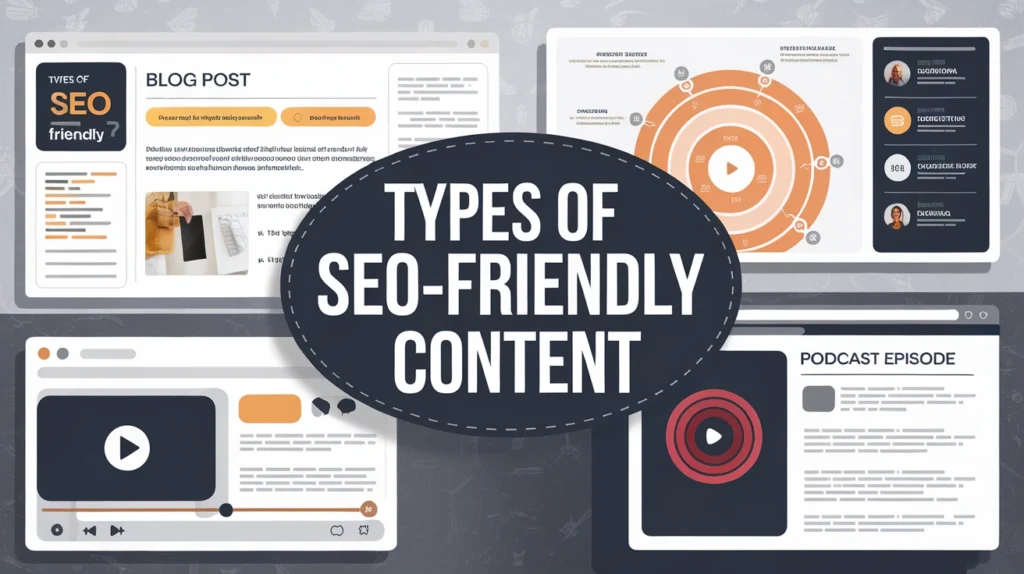
1. Blog Posts & Articles
- Focus on solving user problems and answering queries
- Include primary and secondary keywords naturally
- Use headings, bullet points, and short paragraphs for readability
2. Video Content
- YouTube SEO: optimize titles, descriptions, tags, and thumbnails
- Embed videos in blog posts to improve engagement
3. Infographics & Visual Content
- Shareable visuals attract backlinks
- Can improve social media engagement and referral traffic
4. Case Studies & Whitepapers
- Build authority and credibility
- Useful for B2B content marketing
5. Interactive Content
- Quizzes, calculators, and polls increase engagement
- Keeps users on the site longer, improving SEO metrics
Tools for Content Marketing and SEO

ToolPurposeBenefitAhrefsKeyword research, backlink analysisIdentify opportunities and competitionSEMrushSEO audit and content ideasTrack rankings and optimize contentGoogle AnalyticsTraffic analysisUnderstand user behavior and ROIYoast SEO / RankMathOn-page SEO optimizationImprove search visibilityCanva / FigmaVisual content creationAttractive graphics for engagementGrammarly / HemingwayWriting and readabilityEnsure quality and clarityMailchimp / ConvertKitEmail marketing and automationNurture leads and build audience
Best Practices in 2025
- Focus on E-A-T – Expertise, Authority, and Trustworthiness are critical for SEO.
- Optimize for Voice Search – Use natural language keywords for AI assistants.
- Mobile-First Design – Ensure responsive websites for mobile users.
- Core Web Vitals Optimization – Improve speed, interactivity, and visual stability.
- Use Structured Data (Schema Markup) – Helps search engines understand content better.
- Internal Linking Strategy – Improves navigation and SEO juice across pages.
- Content Refreshing – Update old posts with new data, keywords, and multimedia.
- Leverage AI Tools – AI-powered writing, topic research, and SEO optimization tools.
Measuring Success
Key metrics to track for content marketing and SEO success:
- Organic Traffic – Number of visitors from search engines
- Keyword Rankings – Position of target keywords in SERPs
- Bounce Rate – Percentage of visitors leaving without interaction
- Time on Page – Average duration visitors spend on a page
- Conversion Rate – Leads, sales, or sign-ups generated from content
- Backlinks – Quantity and quality of external links pointing to your site
Advanced Content Marketing Strategies
- Repurpose Content – Turn blog posts into videos, infographics, or podcasts.
- Guest Blogging – Build authority and gain high-quality backlinks.
- Content Clusters & Topic Authority – Create pillar pages with related subtopics to improve SEO.
- Influencer Collaboration – Boost reach and engagement.
- User-Generated Content – Encourage reviews, testimonials, and comments to increase trust.
- Localization & Multilingual SEO – Target local or global audiences effectively.
Common Mistakes to Avoid
- Keyword stuffing or over-optimization
- Ignoring user experience and readability
- Producing low-quality or duplicate content
- Neglecting mobile optimization
- Not analyzing metrics and adjusting strategy
FAQs
Q1: How long does it take to see results from SEO and content marketing? Typically 3-6 months, depending on competition, niche, and consistency.
Q2: Can I do SEO without content marketing? Content is the backbone of SEO; without it, ranking is difficult.
Q3: What’s better: long-form or short-form content? Long-form content generally performs better in SEO if it’s well-structured and engaging.
Q4: Are backlinks still important in 2025? Yes, high-quality backlinks remain a major ranking factor.
Q5: Can AI tools help in content marketing and SEO? Absolutely. AI assists with writing, keyword research, optimization, and analytics.
Q6: How often should I update content? At least once every 6-12 months, or sooner for rapidly changing topics.
Q7: Is social media important for SEO? Social signals indirectly boost SEO by increasing traffic and engagement.
Q8: How do I measure content ROI? Track conversions, traffic, leads, engagement, and revenue generated from content.
Conclusion
Content Marketing and SEO in 2025 are essential for businesses and professionals who want to dominate online. By combining high-quality content with smart SEO strategies, you can:
- Increase organic traffic and visibility
- Build authority and trust in your niche
- Generate leads, sales, and revenue
- Stay ahead of competitors
Key takeaways:
- Plan a clear content strategy targeting your audience
- Conduct keyword research and optimize content for SEO
- Use multimedia and interactive content to engage users
- Track metrics and continuously improve strategy
- Leverage AI tools and automation for efficiency
By consistently applying these strategies, your website or business can achieve sustainable growth and long-term success in 2025.