
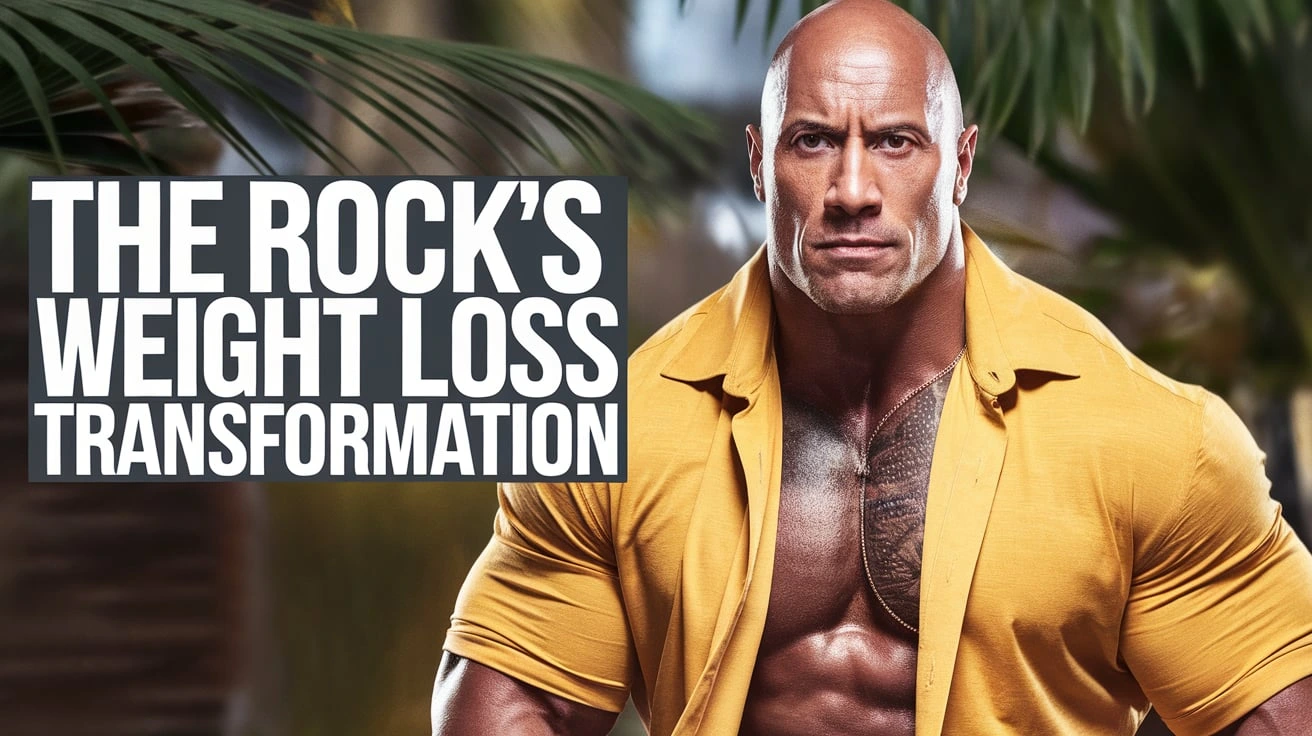
When Dwayne “The Rock” Johnson stepped onto the red carpet at the Venice Film Festival looking markedly slimmer, the world took a collective double-take.
Known for his Herculean build, his leaner physique sent shockwaves through social media — but this wasn’t a mere cosmetic makeover. It was a deliberate transformation rooted in discipline, purpose, and a clear strategic pivot in his iconic career.
This is the story of The Rock’s most dramatic weight loss transformation yet — not just for aesthetics, but for authenticity, longevity, and his next chapter as a serious actor.
Why The Rock Decided to Slim Down A Strategic, Emotional, and Professional Pivot
Dwayne Johnson’s weight loss journey is not a fringe celebrity fad — it’s a profound career decision. For years, Johnson has been synonymous with sheer power and bulk. Action-hero roles in franchises like Fast & Furious, Black Adam, and Jumanji made his muscular silhouette legendary. But recently, he expressed a deeper hunger for dramatic roles, and to deliver authenticity, he knew his body needed to change. Yahoo Sports+2Men’s Fitness+2
In his own words, at a press conference:
“There was just a voice inside of me, a little voice that said, ‘Well, what if I could do more — I want to do more and what does that look like?’” Yahoo Sports
He wasn’t just slimming down for show — he was rebuilding himself to fit the silhouette of Mark Kerr, the troubled MMA legend he plays in The Smashing Machine. Yahoo+1
The Transformation: How Much Weight Did He Lose?
- Reported weight loss: Around 60 pounds (approximately from 300 lbs down to 240 lbs) to prepare for the role of Mark Kerr. Yahoo Sports+1
- Timeframe: Estimated over 12 months, translating to roughly 1 to 1.5 lbs per week — a steady, sustainable pace. meigsindypress.com
- Method: A combination of rigorous training, a carefully curated diet, and mental resilience.
How The Rock Did It The Pillars of His Weight Loss Transformation
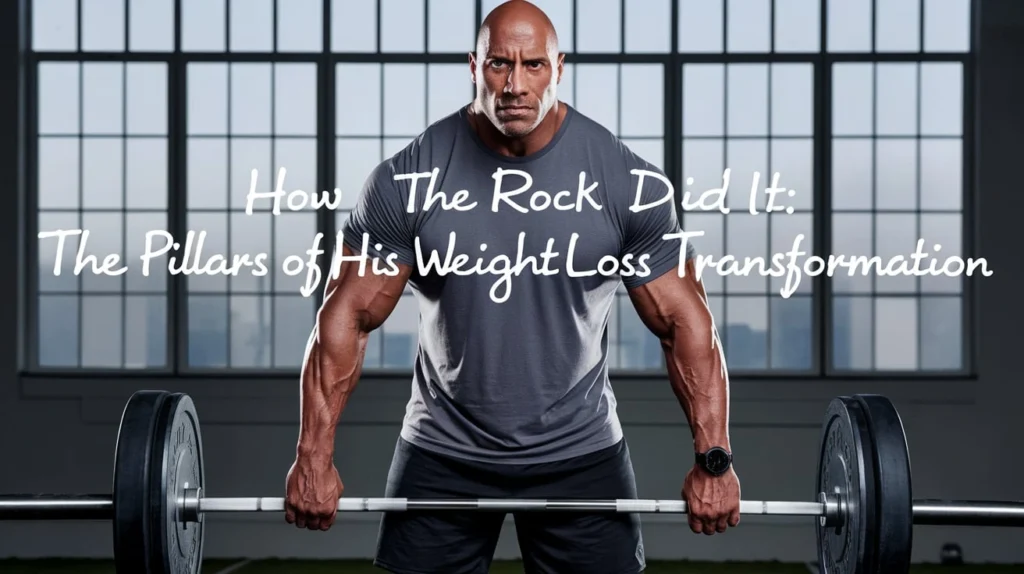
Below are the key elements that powered The Rock’s weight loss transformation — a practical, high-performance blueprint for anyone seeking sustainable change.
1. Tailored Training: From Mass Builder to MMA-Style Conditioning
- Daily Fasted Cardio: The Rock shifted to morning cardio sessions — either high-intensity interval training (HIIT) or steady-state jogging — to burn fat and boost metabolic efficiency. Dr. Brandon Richland, MD+1
- Functional & Combat Training: Rather than lifting heavy for maximum bulk, he adopted MMA-focused workouts, including bag work, grappling drills, and fast-twitch muscle training to replicate Mark Kerr’s athleticism. Yahoo Sports+1
- Strength Training with Lower Weight, Higher Reps: Preserving lean muscle was critical, so he emphasized volume over raw load, balancing strength and endurance. Dr. Brandon Richland, MD
- Recovery Techniques: Active recovery played a big role — stretching, foam rolling, and even cold plunges were part of his regimen, helping him manage stress and maintain longevity. Dr. Brandon Richland, MD+1
2. Diet & Nutrition: A Disciplined Calorie Deficit with Smart Fueling
- Caloric Reduction: At his peak bulk, reports say he consumed up to 8,000 calories per day. For this transformation, he halved his intake — targeting around 4,000 calories daily. Dr. Brandon Richland, MD
- Macro Focus:
- High protein to support muscle retention (lean proteins like grilled chicken, salmon, egg whites). Dr. Brandon Richland, MD
- Complex carbohydrates in controlled portions — sweet potatoes, whole grains, vegetables. Yahoo
- Healthy fats, but with moderation, to maintain hormone balance and satiety.
- Vegetables as staple: Spinach, roasted vegetables, fiber-rich foods to support digestion and recovery.
- Hydration & Gut Health: He reportedly drank up to 2 gallons of water daily, and prioritized his gut health by using apple cider vinegar shots, plant-based nutrients, and probiotics for better digestion. Dr. Brandon Richland, MD+1
- Cheat Strategy: Rather than restrictive dieting, Johnson included mindful indulgence — occasional large cheat meals like pancakes or peanut butter sandwiches, planned carefully to avoid feeling deprived. People.com+1
3. Mental & Emotional Resilience: The Invisible Muscle
- Mindset Reset: Johnson’s transformation wasn’t just physical — he emphasizes that mental discipline was just as vital. He leaned into therapy, meditation, and self-reflection to stay grounded. Dr. Brandon Richland, MD
- Purpose-Driven Motivation: His goal wasn’t vanity — it was character authenticity. Playing Mark Kerr demanded emotional commitment: the role is not just about fighting, but addiction, relapse, and redemption. Yahoo+1
- Longevity Focus: Rather than maintaining an unsustainable mass, Johnson was building a body that could endure: for acting, health, and aging. He acknowledged that huge bulk is hard as you age, and slimming down might give him more career flexibility. Yahoo
Why This Transformation Matters: More Than Just Weight Loss
This isn’t a superficial “Hollywood cut.” The Rock’s shedding of 60 pounds marks a strategic reinvention — one that carries multiple profound implications:
- Career Evolution Johnson is making a deliberate shift from action spectacle to authentic, dramatic cinema. The Smashing Machine presents him not as a superhero, but as a broken athlete pushing through pain. Fans and critics are calling his performance “Oscar-worthy.” Yahoo
- Health & Longevity Maintaining extreme bulk is physically taxing, especially as one ages. By slimming down, he’s likely reducing long-term strain on his body, helping manage recovery, and potentially addressing health concerns. Yahoo
- Image Reinvention Through this transformation, The Rock challenges his own brand: no longer just the muscle juggernaut, he’s proving he can disappear into complex characters, rely on nuance, and surprise the audience. Yahoo
- Inspiring Real Change Fans see this journey as an example that discipline, intention, and resilience can drive profound change — not just for aesthetic goals, but for purpose-driven ones.
Practical Lessons & Takeaways What You Can Learn from The Rock’s Weight Loss Transformation
Whether you’re an athlete, professional, or simply someone chasing personal transformation, Johnson’s journey offers several transferable lessons:
- Set purpose over vanity: Having a meaningful goal (like embodying a character) turns discipline into devotion.
- Build sustainable routines: Fasted cardio, functional training, and recovery are strategically balanced — not crash diets.
- Fuel with intention: A calorie deficit doesn’t mean deprivation. Focus on high-protein, whole-food nutrition; reinforce gut health.
- Mental health matters: Therapy, mindset work, and self-awareness are as critical as any workout.
- Celebrate small wins: Large transformations happen over time. Progress is incremental, consistent, and cumulative.
Comparison: The Rock’s Transformation vs. Traditional Celebrity Weight Loss
AspectTypical Celebrity Weight LossThe Rock’s ApproachMotivationRed carpet, appearanceRole authenticity + career reinventionMethodCrash diets, quick fixesSteady calorie reduction, functional trainingMaintenanceTemporary physiqueSustainable leaner body + longevity focusRecoveryMinimal long-term planningActive recovery, mental health, gut healthMindsetImage-drivenPurpose-driven, emotionally grounded
Risks & Challenges: What Made His Transformation Hard (But Valuable)
- Physical Stress: Reducing bulk while retaining muscle is tough — there’s higher risk of injury, fatigue, or overtraining if not managed properly.
- Mental Fatigue: Maintaining discipline for such a long, intensive process can lead to burnout without strong mental strategies.
- Recovery Needs: Elite training demands elite recovery — without proper rest, nutrition, and therapy, progress may stall or regress.
- Public Scrutiny: When a global icon like The Rock changes drastically, rumors fly. Some speculated that he used weight-loss drugs; experts emphasize that his disciplined, structured approach is more likely. Yahoo+1
- Long-Term Maintenance: After dramatic weight change, there’s always a challenge: how to maintain the new weight without reverting or going to extremes again.
FAQs
Q: How much weight did The Rock lose? A: Reports suggest Dwayne Johnson shed around 60 pounds, reducing from approximately 300 lbs to about 240 lbs for his role in The Smashing Machine. Yahoo Sports+1
Q: Why did The Rock lose weight? A: He slimmed down primarily to play MMA legend Mark Kerr authentically — a role that demands a different physical and emotional presence than his usual action-hero persona. Yahoo
Q: What kind of training did he do to lose weight? A: His regimen shifted from bulk-focused lifts to fasted cardio, functional MMA-style training (bag work, grappling), and strength work with lower weight but higher repetitions. Dr. Brandon Richland, MD
Q: What did The Rock eat during his weight loss phase? A: His diet involved a significant reduction in calories (to around 4,000/day), focusing on lean proteins (like salmon and egg whites), complex carbs (vegetables, sweet potatoes), lots of water, and gut-health support like probiotics and fiber-rich foods. Dr. Brandon Richland, MD
Q: Did he take any shortcuts or use weight loss drugs? A: According to experts, there’s no public evidence he used drugs like Ozempic. Analysts believe his weight loss was achieved through strict portion control, a disciplined diet, and targeted training. Yahoo
Q: Is this weight loss sustainable for him? A: It appears to be. Johnson’s transformation was deliberate and long-term: his focus on recovery, mental health, and functional training suggests he’s not just dieting — he’s evolving his physique to match a new era of his career. Yahoo
Conclusion
Dwayne “The Rock” Johnson’s weight loss transformation is more than a celebrity fitness story — it is a masterclass in intentional reinvention. By shedding nearly 60 pounds, he didn’t just change his appearance — he altered his trajectory. With disciplined training, a tailored and sustainable diet, and profound mental resilience, Johnson has ushered in a new chapter of his career: one grounded in authenticity, depth, and risk-taking.
This journey reminds us that transformation at its best isn’t about extremes — it’s about purpose, persistence, and evolution. Whether you’re inspired by health goals, professional pivots, or simply self-growth, The Rock’s path shows that with the right mindset and method, reinvention is always within reach.